
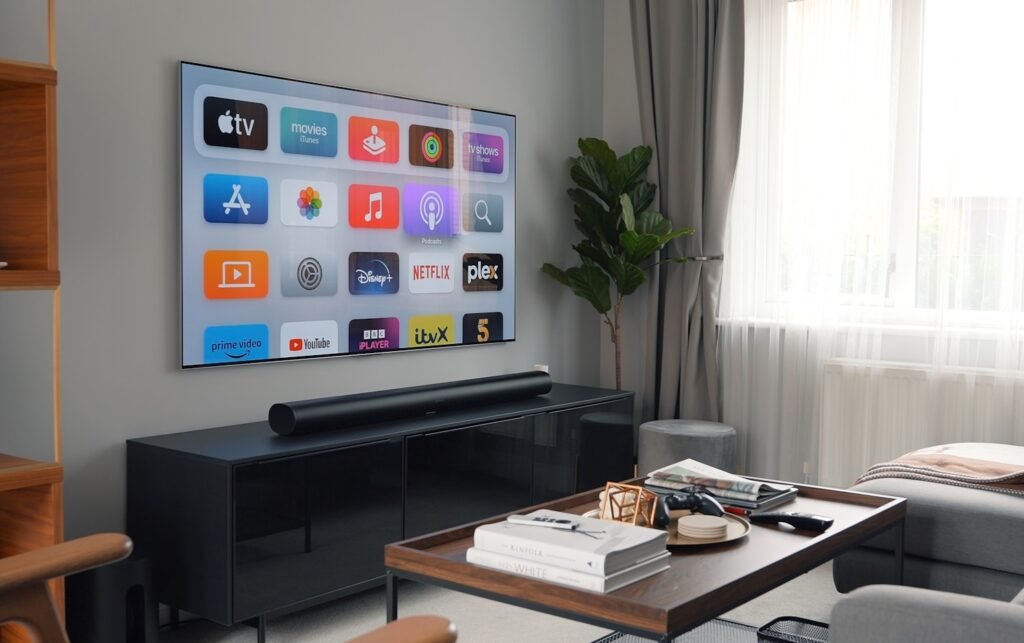
In a world where TVs get thinner and ads get louder, it’s never been easier to overspend on “cinematic” audio without really knowing what you’re buying.
Buying premium soundbars are easy — every billboard and review promises a “cinematic” experience right in your living room. But understanding how sound systems actually work is what separates a truly immersive setup from an overpriced piece of hardware. That’s the whole point: “never rush to buy” unless you know what suits your space, your ears, and your habits.
I’m here to help you make a smart and satisfying choice — not just the most expensive one. It breaks down what Dolby Atmos really means, why channel configurations like 3.1 and 5.1 matter, and which 2026 soundbars deliver genuine quality instead of hollow marketing. The goal is to find balanced, authentic sound that feels right to you.
Quick Comparisons 🆚
| MODEL | Channel Setup | Ideal Room Size | Key Strength | Expandability |
| Sonos Arc + Sub + Speakers | 9.1.4 | Medium-Large | Smart features, seamless app control | Wireless rears |
| Samsung QN990D | 11.1.4 | Large | True cinematic immersion | Fully loaded |
| LG S95TR | 9.1.5 | Large | Height precision, musical clarity | None needed |
| Sony HT‑A3000 | 3.1.2 | Small‑Medium | Compact 3D realism, gaming support | Add rears/sub |
| Bose Smart Ultra | 5.1.2 | Small | Dialogue clarity, elegant design | Add rear + sub |
| Philips Fidelio FB1 | 7.1.2 | Medium | Outstanding value | Add sub/rears |
i.e. Room sizes: (rough calculations)
- Large → 215–430 sq.ft
- Medium → 170–320 sq.ft
- Small → 160–270 sq.ft
How to Choose Between 3.1, 5.1, and Larger Setups 👀
| Room Type | Best Setup | Why It Works |
| Apartment / Bedroom | 3.1 or 3.1.2 | Compact footprint, strong dialogue presence, easier placement. |
| Medium Living Room | 5.1 / 5.1.2 | Audio wraps around listener; good ceiling reflections for Atmos. |
| Dedicated Media Room | 7.1 / 9.1+ | For enthusiasts seeking real overhead channels and cinematic pressure. |
💡Pro tip: Even 3.1 systems supporting Atmos can outperform cheap pseudo‑5.1 bars if tuned well and calibrated properly. Quality drivers and well‑implemented processing matter more than sheer channel count.
Table of Contents
What Dolby Atmos Actually Does? 🐣
Dolby Atmos isn’t just about louder sound — it’s about spatial sound. Unlike older 5.1 systems that send audio to fixed channels (front, center, surrounds), Atmos treats each sound as a separate “object.” These can move freely around you, creating a dome of sound that adds true height to what you hear.
Think of hearing raindrops above your head, jets overhead, or a whisper that wraps around your ear — that’s the Dolby Atmos effect.
At home, it’s achieved either through:
- Up‑firing speakers: sound reflects off your ceiling to simulate overhead effects.
- Virtualised Atmos processing: software algorithms mimic the sense of space using fewer speakers.
Best Dolby Atmos Soundbars (3.1 & 5.1) to Buy in 2026 🤩
Sonos Arc (Gen 2) + Sub (Gen 3) — best premium 9.1.4 dolby atmos soundbar
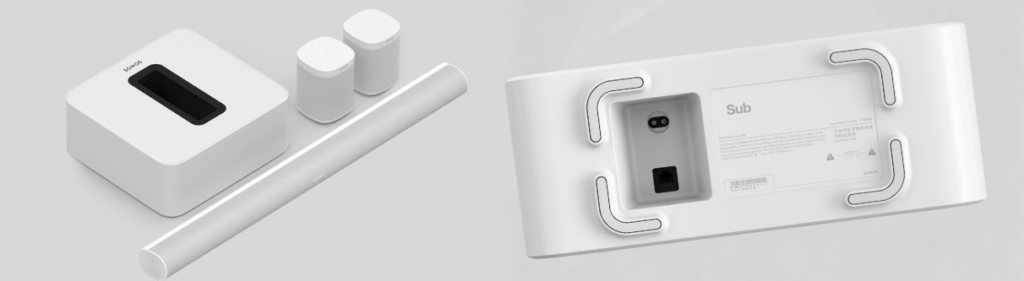
Why it stands out: Sonos continues to dominate the premium soundbar space by taking simplicity and sound precision to new levels. The Arc’s second generation, launching in 2026, refines its already magnificent Dolby Atmos presentation with crisper highs and tighter bass, especially when paired with the Sonos Sub (Gen 3).
Key highlights:
- 11 drivers with dual up‑firing speakers for cinematic height.
- True play tuning automatically balances tone for your room.
- Works seamlessly with Sonos One SL speakers or Era 100s for wireless 5.1 expansion.
- eARC and Wi‑Fi support for lag‑free Atmos streaming.
Performance:
Movies like Dune or Top Gun: Maverick truly surround you — you can practically track sound objects moving overhead. Even stereo music gains depth and warmth, thanks to Sonos algorithms. The expandable design lets you start as a 3.1 system (Arc + Sub) and later add surrounds for full immersion.
Perfect for: Audiophiles and smart home users who want exceptional fidelity, scalability, and minimalist design.
Samsung QN990D — the most immersive 11.1.4 flagship soundbar
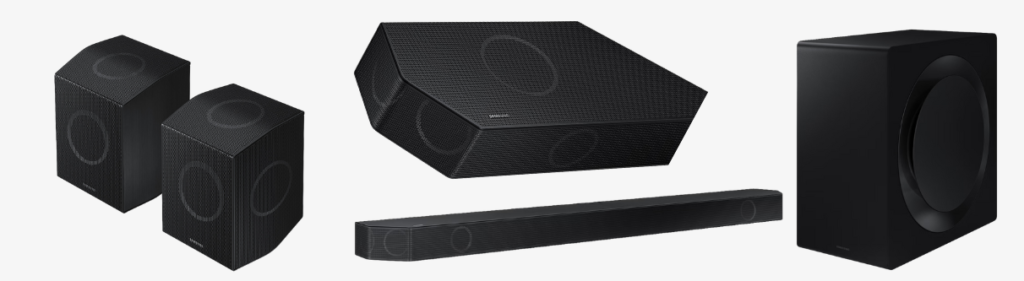
Why it stands out: With each generation, Samsung’s Q‑series raises the bar for Atmos soundbars. The QN990D (2026) delivers genuine 11.1.4 channels, wireless rears, and a thunderous 8‑inch subwoofer — making it arguably the most complete Atmos package at home.
Key highlights:
- Eleven channels of room‑shaking audio with four up‑firing drivers.
- Rear speakers included (also feature upward drivers).
- Q‑Symphony 3.0 synchronises perfectly with Samsung QLED and OLED TVs.
- Wireless Dolby Atmos support — no HDMI cable needed (on compatible TVs).
- AI remastering optimises sound in real time.
Performance:
Everything, from helicopter chase scenes to orchestral swells, is delivered with breathtaking 3D realism. Bass is deep but controlled; dialogue remains clear even during explosions. The system auto‑calibrates according to your room to ensure balanced surround perception.
Perfect for: Large‑room setups and cinephiles who want a true theatre-grade experience without separate amplifiers.
LG S95TR — best 9.1.5 system for true height realism
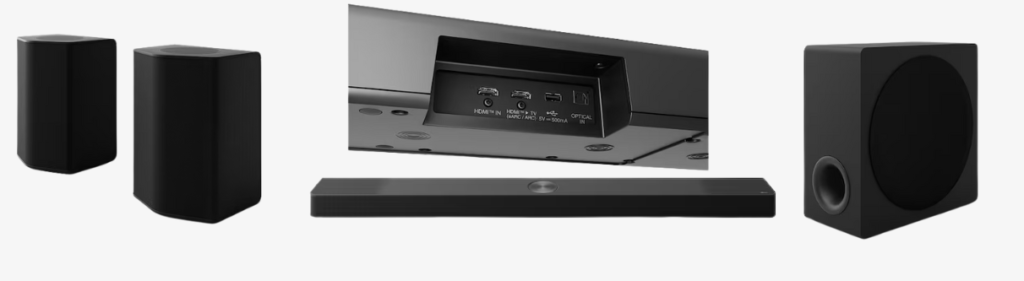
Why it stands out: LG’s top‑tier Dolby Atmos system integrates five upward‑firing speakers, including rears. Combined with tuning by Meridian Audio, the S95TR delivers extraordinary spatial sound with natural tonality. It’s both for cinematic and musical.
Key highlights:
- True 9.1.5 configuration with wireless rears and subwoofer.
- AI Room Calibration Pro for automatic tuning.
- DTS:X, IMAX Enhanced, and Hi‑Res Audio support.
- Sleek modular design fits medium‑to‑large living rooms.
Performance:
Height effects truly pop. When thunder rolls, it feels like it’s striking above you rather than from the TV. Vocals in Atmos music tracks stand out with concert‑hall clarity. LG’s system feels alive, dynamic, and finely detailed — yet it’s still easy to set up wirelessly.
Perfect for: Users who value natural tonality and room‑filling height impact equally for movies and music.
Sony HT‑A3000 (3.1.2) — best 3.1 dolby atmos system for balanced simplicity
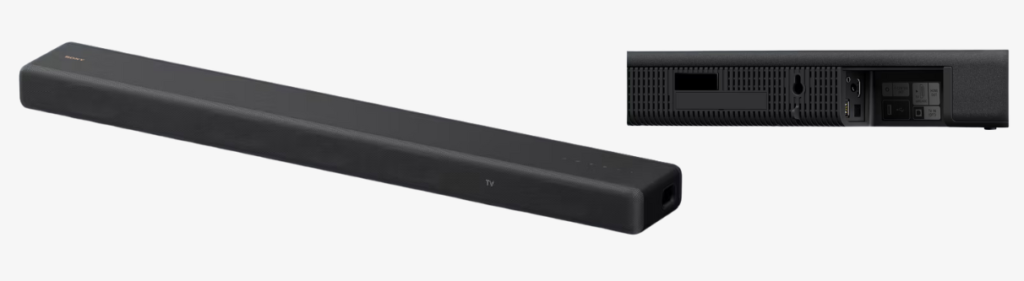
Why it stands out: For users who want cinematic depth but without the complexity of multiple speakers, Sony’s HT‑A3000 presents the perfect 3.1.2 Dolby Atmos solution. The upgraded 2026 model carries Sony’s latest 360 Spatial Sound Mapping, giving illusionary depth even in modest spaces.
Key highlights:
- 3.1.2 configuration: three front‑facing speakers, built‑in subwoofer, and dual up‑firing drivers.
- Optional SA‑RS3S rears and SA‑SW3 sub add scalability to 5.1.2 later.
- Hi‑Res Audio Certified with DSEE Extreme enhancement for music.
- HDMI 2.1 passthrough supports 4K/120 Hz gaming and VRR.
- Works seamlessly with Bravia TVs and PlayStation 5.
Performance:
For a 3.1 setup, the width and precision are remarkable. The sound feels spacious and airy, thanks to Sony’s vertical surround processing, while dialogues remain crystal clear. Whether watching The Mandalorian or streaming Atmos music, the sense of elevation and clarity never feels artificial.
Perfect for: Apartment dwellers, gamers, or families who want genuine Atmos experience without clutter.
Bose Smart Ultra Soundbar + Bass Module 700 — elegance in a 5.1.2 package
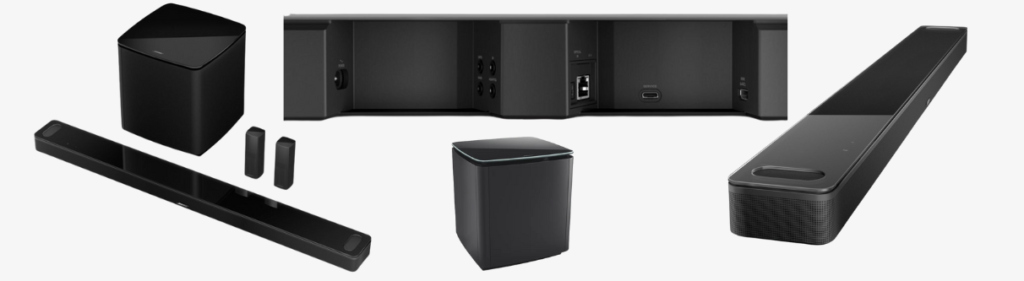
Why it stands out: Bose blends minimalist aesthetics with surprisingly rich sound in its 5.1.2 Dolby Atmos solution. The Smart Ultra Soundbar (2026) joined with Bass Module 700 adds muscle to its clean, voice‑forward sound signature.
Key highlights:
- ADAPTiQ auto‑calibration for individualised performance.
- Bose TrueSpace up mixing enhances non‑Atmos content.
- Alexa and Google Assistant built‑in.
- Polished glass top and metal grille design complement modern interiors.
Performance:
Expect crisp, cinematic imaging without the harsh highs typical in slim bars. Dialogue is centre‑anchored, while the sub adds strong depth perfect for soundtracks and dialogue‑heavy shows. You get the refined sophistication of Bose coupled with immersive width — ideal for those seeking simplicity with style.
Perfect for: Users prioritizing design, quality, and seamless usability in smaller living rooms.
Philips Fidelio FB1 7.1.2 — the value‑for‑money winner
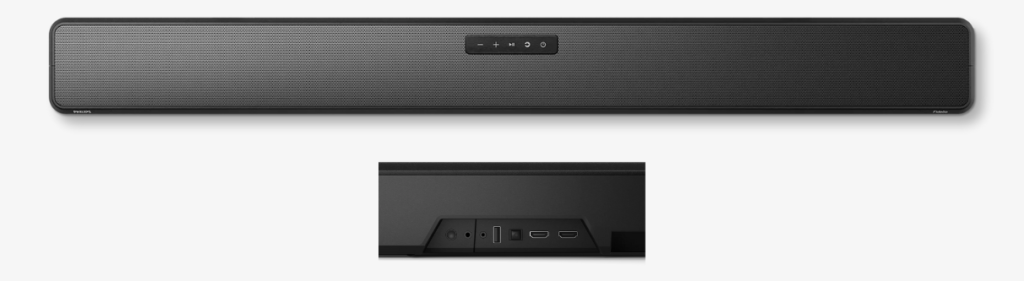
Why it stands out: Philips’ Fidelio FB1 delivers powerful Dolby Atmos performance at a surprisingly accessible price. It manages to sound bigger than many 5.1 systems and works beautifully across genres — from blockbuster films to ambient music playlists.
Key highlights:
- 15‑driver 7.1.2 design with integrated up‑firing speakers.
- Built‑in subwoofers and side drivers for wide dispersion.
- IMAX enhanced, DTS:X, and Hi‑Res Audio‐ready.
- Premium wood‑grain finish and touch‑sensitive controls.
- Expandable with Fidelio FW1 sub or FS1 rear speakers.
Performance:
Even without external subs, the FB1 offers punchy bass and believable height. It’s tuned for everyday users who crave quality‑first sound without extravagant cost. Voices and instrument separation are exceptional at this price, and height virtualisation feels natural in most living rooms.
Perfect for: Budget‑conscious audiophiles or mid‑sized spaces — it delivers high‑end sound without the high‑end bill.
FAQ’s ⁉️
Do I need a special TV for Dolby Atmos soundbars?
Not always. As long as your TV has HDMI eARC or ARC, it can pass Dolby Atmos audio from built‑in apps or external streaming devices to your soundbar. eARC is preferred because it supports higher‑quality, uncompressed audio — ideal for true Atmos playback. Even older TVs can still use optical connections, but that limits surround and height effects.
What’s the difference between 3.1, 5.1, and 7.1.2 Dolby Atmos setups?
Those numbers describe how many speakers or channels a system uses:
• 3.1 = Left, Right, Center + Subwoofer — perfect for clear dialogue and front‑focused sound.
• 5.1 = Adds two rear channels for wrap‑around surround effects.
• 7.1.2 = Expands even further by adding rear and height channels, creating immersive overhead sound.
For small or mid‑sized rooms, 3.1 or 5.1 is usually enough; 7.1.2 shines in large or open spaces.
Can small rooms still benefit from Dolby Atmos?
Absolutely. Even compact rooms can create impressive spatial sound, as long as the up‑firing speakers have a flat, reflective ceiling (about 2.4–3 m high). In tighter spaces, 3.1.2 or 5.1.2 soundbars give great results without overpowering the room. Systems like the Bose Smart Ultra or Philips Fidelio FB1 are ideal examples.
Is Dolby Atmos good for music, or just movies?
Dolby Atmos isn’t only for films — it’s also revolutionizing how we experience music. On platforms like Apple Music, Tidal and Amazon Music, Atmos‑mixed songs spread vocals and instruments across 3D space, giving you a sense of sitting inside the recording studio. Genres like acoustic, orchestral, or live performances especially benefit from the depth and realism.
Are Dolby Atmos soundbars worth the money?
Yes — if you care about immersion and clarity. Even a midrange Atmos bar drastically outperforms TV speakers by delivering wider sound, cleaner dialogue and room‑filling bass. Instead of just loud noise, you get depth, direction, and a true cinematic experience without needing multiple bulky speakers.
At the end of the day, it’s not just about surround channels or wattage charts — it’s about what sound does for you. Dolby Atmos isn’t meant to show off specs; it’s meant to remind you how powerful good sound can feel when it connects with something deeper. Sure, anyone can buy the most expensive 11.1.4 setup, but the real magic happens when you tune your space, make thoughtful choices, and appreciate what each note or effect brings into your room.
Ask yourself what you truly want out of your setup — pure performance, balance, or connection? Because when you start building your sound with a sense of purpose, you stop chasing trends and start creating experiences. That’s when your system, no matter how big or small, stops being just equipment — and becomes part of your story.
Knowing is not enough, You must take action!
Tony Robbins
Signing off
– Harish Swaminathan